Chess Sets

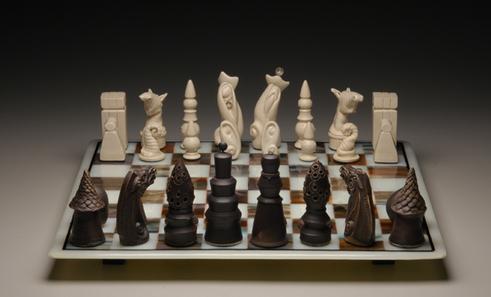
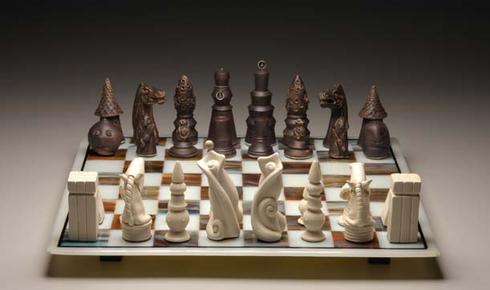
Muddy River Arts Chess Set (2012)

MRA is a group of artists working in clay, glass, metal, and fiber.  This collaborative chess set was created as a donation item for the Craft Alliance, a community based arts organization in St. Louis, MO. The concept for this item is collaboration, as CA collaborates with the community to work with and empower individuals through self-expression.


Design Concept and Project Manager: Yuko Suga

Artists: Clinton Berry, Steph Cohen, Kim Fritts, Michelle Hamilton, Kerstin Hueneke, Vanessa Lang, Nancy McNiff, Kitty Mollman, Joel Price, Ann Thompson, Yuko Suga, Nancy Triplette


World Chess Hall of Fame collection

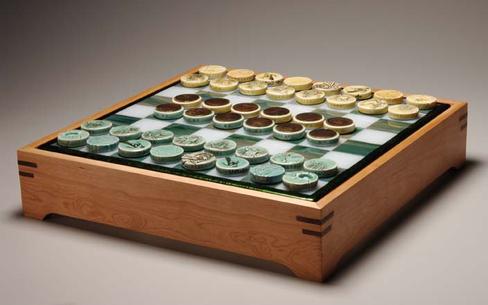
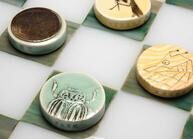
Muddy River Arts Chess Set (2013)

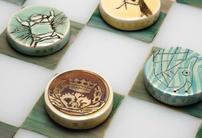
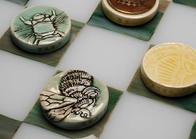
This collaborative chess/checkers set was created as a second donation item for the Craft Alliance.  The theme of this set was a playful interpretation on the attributes we apply to different species.


Design Concept and Project Manager: Yuko Suga

Artists:  Clinton Berry, Kim Fritts, Kerstin Hueneke, Vanessa Lang, Kitty Mollman, Dganit Moreno, Ann Thompson, Mark Thompson, Yuko Suga.


Private collection.

Image Re: In Chess

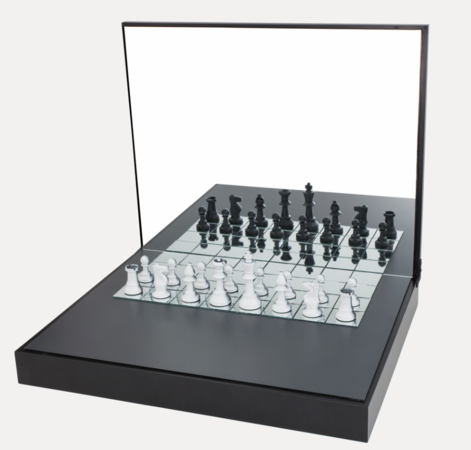
Upon first glance, the chess set is one-sided. There is only one set of pieces and half of a board, which limits how far one could progress in the game. The observer is faced with being both competitors simultaneously. You see yourself in the face of the opponent. True competition is competing with yourself. To know your opponent is to know yourself.


The Pawns and Pieces

Each piece is both white and black. Every individual has contradictions and inconsistencies in beliefs, actions, and perceptions. The truth lies somewhere in between. The pieces sit on separate mirrors, with different sets of functions. One piece does not single-handedly win a game.


The Chess Board

The platform is the back of a mirror. The square mirrors are also individual floating pieces of glass. They are part of a larger group, a bigger picture, yet retain their individual space.


Materials

Glass, wood, acrylic, plastic

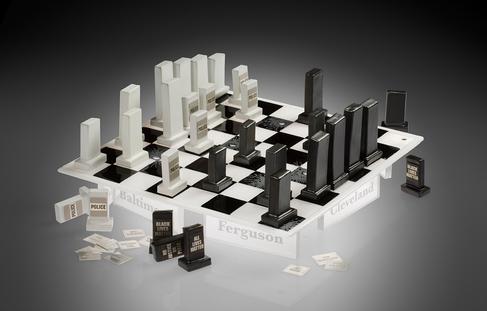
Checkmate: Series I

This is one artist’s work: one statement, one opinion. Art speaks to the observer, and engages one into an interaction with what the individual brings to the work and what the work represents to him or her.

I typically refrain from specific explanations of my work; however, this is an exception due to the subject matter. Our community continues to struggle, and our losses (on many levels) continue to grow. This is the first in a series and is the culmination of working and re-working the details and components as events continue to unfold.


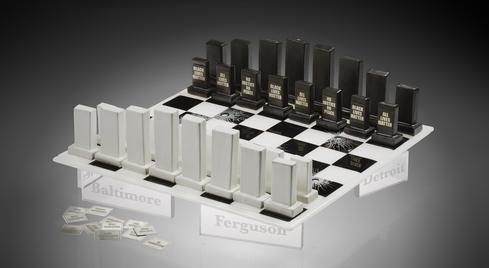
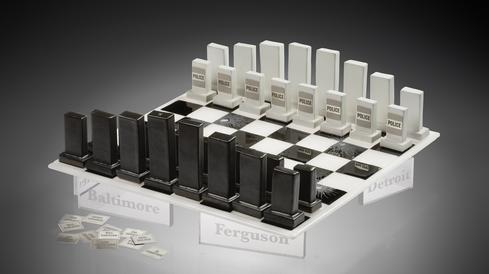
At first glance, the chess set appears uniform; however, each piece is unique, as are the individuals they represent despite the roles they play. No one is exactly as they appear in their public role. The pieces represent public figures and individuals in positions of power. The pawns (protestors and law enforcement) remain consistent, regardless of time and place, just like the struggle for equality, respect, and responsibility.

We begin with the black pawns: on the left with “Black Lives Matter” in the hope that we end where the line of pawns ends, knowing that “All Lives Matter”; however, where we end up completely depends upon how each player chooses to move.


The configuration of the base changes as more incidents occur. While each act of violence, each bullet-hole, brings issues to light; it is another blow that further deteriorates the foundation of our community, our society.If our collective actions continue on this path, this foundation, the chessboard, will continue to weaken and deteriorate until it collapses.


Materials:
Sterling silver, porcelain, Bullseye glass, acrylic
Weapon of Choice

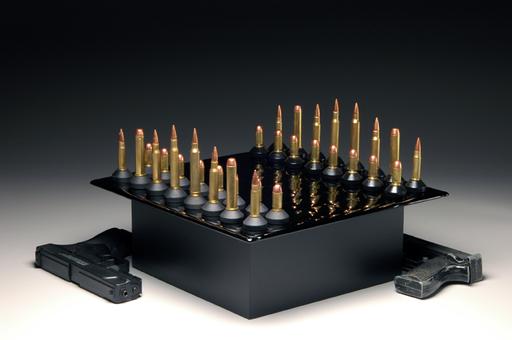
#1 Point Blank

Chess requires a process of learning and applying knowledge gained through experience to develop a player’s abilities. Resourcefulness is built upon factors that shape how s/he interprets and responds to situations.

On the other hand, the physical presence of guns immediately changes the conversation and dynamics of power. Dialogue changes to a monologue, a statement and a threat. The choice is whether to proceed as an interaction, or if and how a player will chooses to win and at what cost.


Materials
Glass, brass, copper, steel, plastic

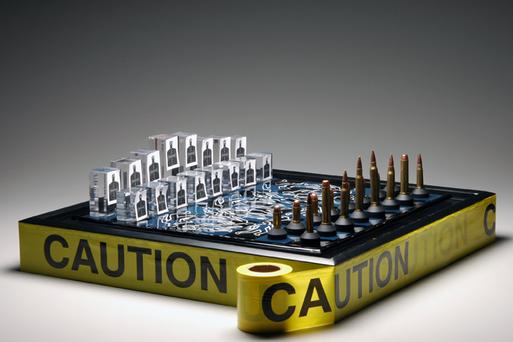
#2 Right

Gun rights is about maintaining 2nd amendment rights on one side, and equally passionate individuals about gun control on the other. When pieces are lined up on the board, there is alignment and structure. Placement of pieces resembles a practice range, where rules and responsible use of guns are present.


Once the game begins, the unpredictable behavior of individuals where laws and rules of conduct are in stark contrast. Targets shift to reflect the human toll. Yellow caution tape cordons off the board, eliciting the exclusion of individuals, segregation of communities, deepening the divide.


Materials

Glass, brass, copper, acrylic, wood, paper